
What you need to know
- The WMO forecasts rapid development into a strong El Niño event during July-September 2026.
- Sea-surface temperature anomalies in key monitoring regions are expected to exceed 2C.
- Above-average temperatures are predicted for most land areas between 60S and 60N.
- Drought and wildfire risk rises across Southeast Asia, Australia, northern South America and Indonesia; flood risk rises in East Africa and South America.
- The WMO does not attribute this summer's European heatwaves to El Niño.
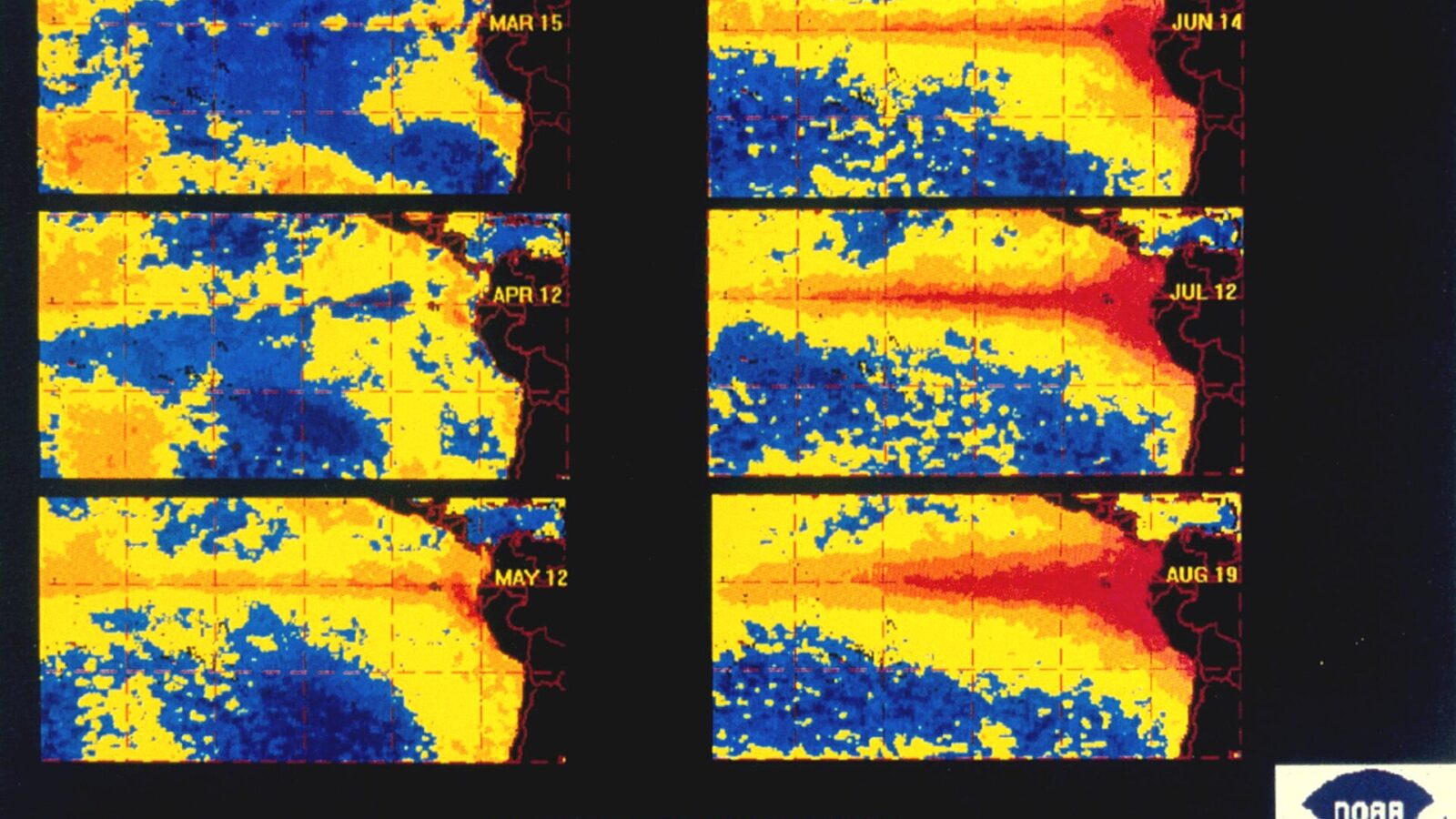
The World Meteorological Organization has forecast rapid development into a strong El Niño event between July and September 2026, warning that the Pacific warming will raise the likelihood of heatwaves, droughts and heavy rainfall across much of the world. Sea-surface temperature anomalies in key monitoring regions are expected to exceed 2C.
What does the forecast say?
The projection appears in the WMO’s monthly Global Seasonal Climate Update, issued from the agency’s Geneva headquarters. Multi-model ensemble forecasts from leading global producing centres show consistent and significant warming across the central and eastern equatorial Pacific.
Forecast models show unusually close agreement, which the agency says gives high confidence in the outlook. El Niño is expected to keep strengthening through the Northern Hemisphere autumn.
The WMO grades these events as weak, moderate, strong or very strong. A strong classification places this event at the third of four levels.
WMO climate scientist Alvaro Silva told a press conference that confidence in strong conditions developing had increased substantially since the previous month, and indicated the agency may issue further updates if models point to an even more intense event.
Which regions face the greatest risk?
The update predicts above-average temperatures across most land areas between 60 degrees south and 60 degrees north, covering nearly all populated regions outside the poles.
Over the oceans, there is more than an 80 per cent likelihood of above-normal sea surface temperatures in the equatorial Pacific east of the Date Line. Above-normal temperatures are also forecast for the Indian Ocean and tropical Atlantic, while a horseshoe-shaped pattern of below- to near-normal probabilities is expected across the North Atlantic.
Past strong events offer a guide to regional impacts. South America, the southern United States, East Africa and Central Asia have seen heightened flood risk, while drought and wildfire risk increased across large parts of Australia, northern South America and Indonesia. Southeast Asia is among the regions where drought risk rises.
European effects tend to be indirect and milder, potentially producing an unsettled, wetter and windier autumn and early winter.
Is El Niño causing this summer’s heatwaves?
No. The recent heatwaves that killed thousands of people across Europe are not attributed to El Niño, despite reporting that has linked the two. The WMO update does not draw that connection.
Effects from El Niño are concentrated in the tropics and typically peak during the Northern Hemisphere winter, months after the event begins developing.
Separately, an attribution study by World Weather Attribution found that Europe’s June heatwave would have been virtually impossible fifty years ago, pointing to long-term warming rather than the Pacific cycle.
What are the wider consequences?
Food prices, water supplies and tropical storm seasons across vulnerable regions are closely tied to how strong the event becomes before it peaks. Crop failures in affected areas carry knock-on effects for importing countries.
The phenomenon occurs irregularly every two to seven years, when eastern Pacific sea temperatures become unusually warm and push global temperatures higher. The 2023-24 event was among the five strongest recorded and contributed to 2024 becoming the hottest year measured, at roughly 1.55C above the 1850-1900 average.
WMO Secretary-General Celeste Saulo said advance seasonal forecasts and early warnings are vital to saving lives and cushioning economic impacts. The agency has begun coordinating across UN bodies and regional partners to support governments, humanitarian agencies and climate-sensitive sectors including agriculture, health and water management.
Related coverage
Sources for this report

The Redline News Desk
The Redline News desk files and edits world reporting. Every story carries the sources it was built from, and corrections are published on the story itself.
Leave a Reply