
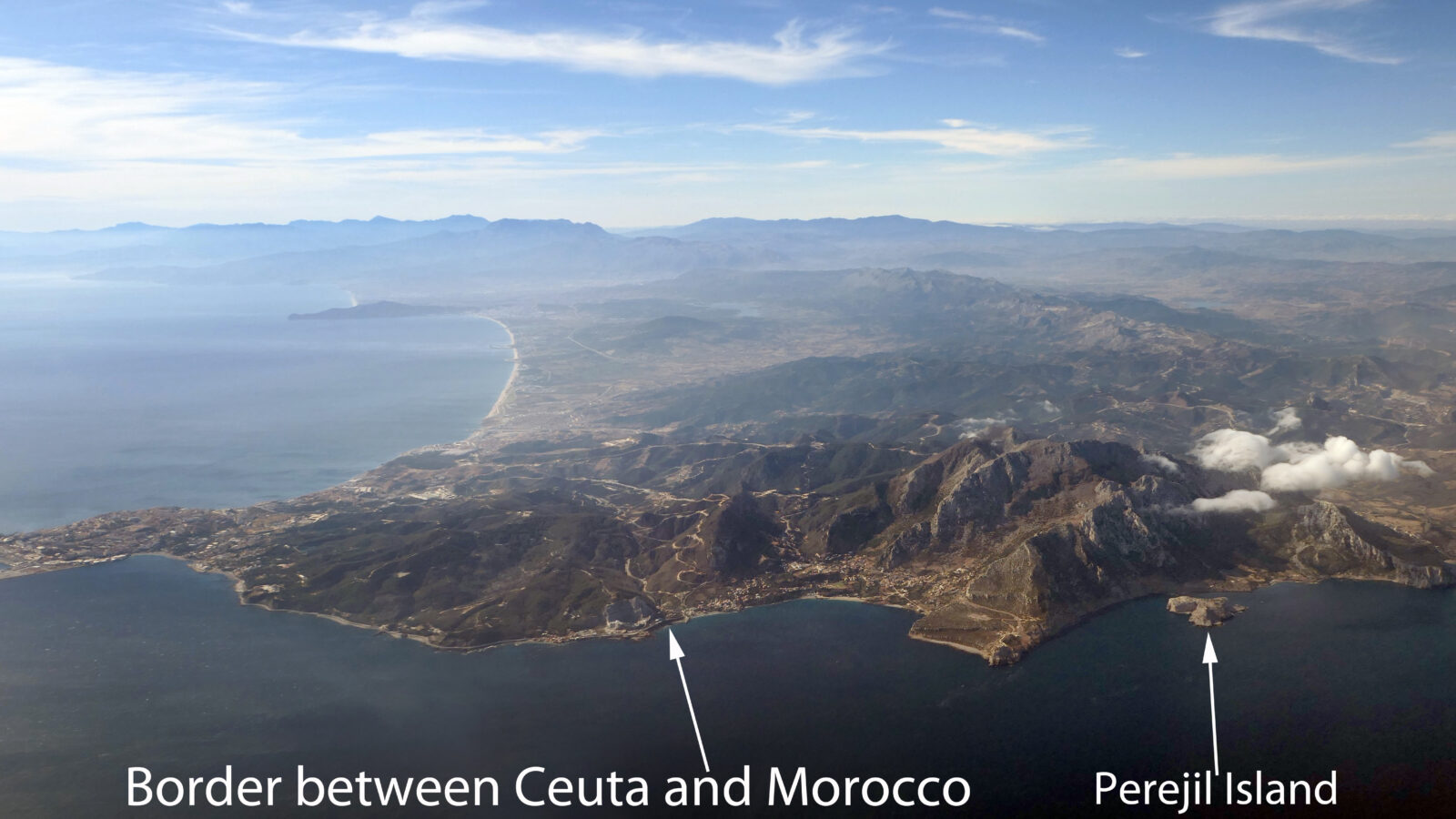
European Union interior ministers will hold an emergency videoconference on Tuesday over the crossing of tens of thousands of migrants from Morocco into the Spanish enclave of Ceuta, in which at least 67 people died.
Ireland, which holds the rotating presidency of the Council of the European Union, called the meeting of the Justice and Home Affairs Council. Taoiseach Micheal Martin announced it after 22 of the bloc’s 27 member states signed a joint open letter demanding a coordinated response.
What happened at the border?
Around 50,000 people crossed from Morocco into Ceuta from Thursday, according to the Spanish Interior Ministry, in an influx far larger than the roughly 12,000 recorded over two days in May 2021.
The death toll is disputed. Spanish authorities say 88 bodies have been recovered, against an initial figure of at least 67. Morocco’s Interior Ministry has confirmed 11 deaths and says it is coordinating with Spanish officials to verify the total. Some drowned and others were crushed while attempting to swim around or climb the Tarajal breakwater, which carries the border fence into the sea.
Foreign Minister Jose Manuel Albares wrote that “virtually all those who entered Ceuta have now returned to Morocco”. Spain installed a 500-metre floating containment barrier at Tarajal on Saturday, with Civil Guard officers beginning work early that morning and police boats patrolling the coast.
Why has the EU called an emergency meeting on Ceuta?
The European Union called an extraordinary videoconference of its Justice and Home Affairs Council for Tuesday 4 August 2026 to address the crossing of around 50,000 migrants from Morocco into Ceuta, a Spanish enclave on the North African coast, beginning on Thursday 30 July. At least 67 people died during the crossings, most by drowning or crushing at the Tarajal breakwater. The meeting was convened by Ireland, which holds the rotating Council presidency, after 22 of the EU’s 27 member states signed a joint letter calling for coordinated action and the strengthening of external borders. Spanish authorities say virtually all those who entered have since returned to Morocco voluntarily, and Spain has installed a 500-metre floating barrier at the sea border. Ceuta has been under Spanish control since 1580 and is one of two European-held territories on mainland Africa.
What does the letter demand?
The signatories, who include Italy’s Giorgia Meloni, Denmark’s Mette Frederiksen and Germany’s Friedrich Merz, said they were determined to prevent smugglers from challenging the integrity of the bloc’s external borders, and called for support for Spain in restoring control.
They said they would consider any necessary measures, including reinforcing or reintroducing temporary internal border controls. The letter also criticised a Spanish scheme granting legal status to some undocumented migrants, arguing it created a pull factor.
Emmanuel Macron of France, Luis Montenegro of Portugal and Luc Frieden of Luxembourg did not sign.
How has Spain responded?
Prime Minister Pedro Sanchez criticised what he called a selfish attitude from some member states. European Commission President Ursula von der Leyen welcomed the meeting and said “not a single person reached mainland Spain or the rest of the EU”.
Juan Jesus Vivas, president of Ceuta, called on Madrid to declare a national emergency and establish a single command structure, saying the crisis had exceeded the city’s ordinary capacity.
Related coverage
Sources for this report

The Redline News Desk
The Redline News desk files and edits world reporting. Every story carries the sources it was built from, and corrections are published on the story itself.
Leave a Reply