
What you need to know
- More than 300,000 people were evacuated across France and Spain at the peak of the wildfire emergency.
- France described it as the country's largest peacetime evacuation since the Second World War.
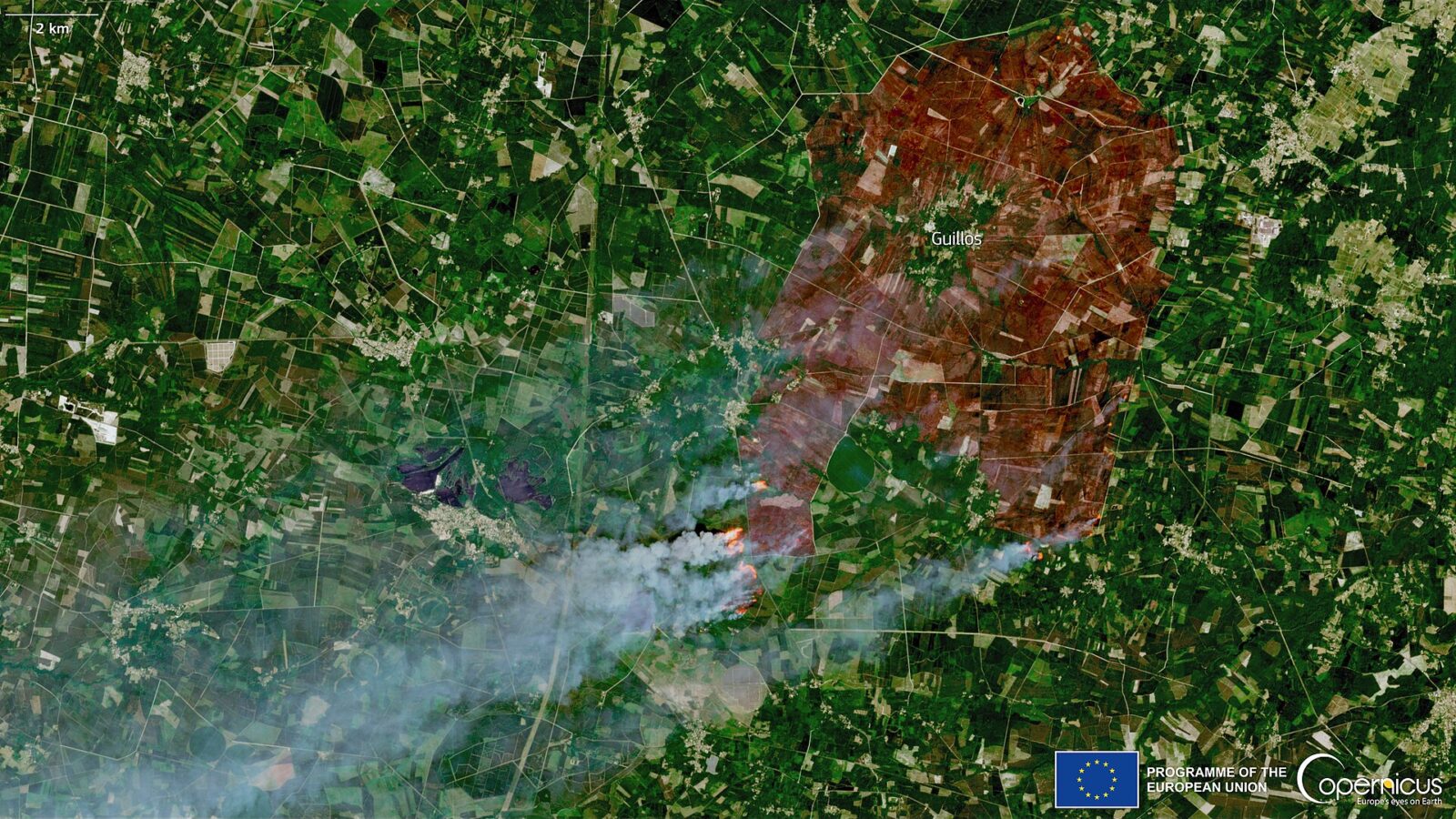
- The Gironde blaze has burned an area roughly four times the size of Paris; 93 firefighters have been injured.
- Spain has lifted its remaining evacuation orders for Ávila province and two towns near Madrid.
- The Burgohondo fire in Ávila is the largest ever recorded in Spain.
Firefighters in south-western France are battling renewed flare-ups as a fresh heatwave settles over the region, while Spain has lifted its remaining evacuation orders and allowed thousands of people to return home. At its peak the emergency displaced more than 300,000 people across the two countries, in what France called its largest peacetime evacuation since the Second World War.
How large is the French fire?
The blaze west of Bordeaux has burned an area roughly four times the size of Paris since it began last week. At points it behaved as a self-feeding firestorm, generating its own wind and spreading erratically toward the Bordeaux metropolitan area.
Around 220,000 people were moved out of homes and holiday accommodation in the Gironde. On Tuesday authorities ordered nearly 4,000 more evacuated from tourist sites on the Atlantic coast as returning heat threatened a fragile containment line.
Firefighters and military engineers have completed 103 kilometres of tactical firebreaks intended to stop the flames crossing into new terrain. Ninety-three firefighters have been injured.
Even after a full day without further advance, officials warned that smouldering vegetation, rising temperatures and falling humidity could produce fresh outbreaks anywhere along the perimeter.
Why has the Gironde burned so badly?
The region’s geography works against it. The Landes Forest is a man-made pine plantation established in the 1700s to drain swampy ground, and it now represents an enormous concentration of fuel.
Repeated heatwaves through the summer have left that landscape exceptionally dry. Scientists attribute the lengthening and intensifying of such heatwaves primarily to the burning of fossil fuels.
The area is also densely populated in summer, combining beaches, surfing resorts and wine country, which is why evacuation numbers climbed so quickly.
What is the situation in Spain?
Improving, cautiously. Spain lifted the last evacuation orders for Ávila province and for the final two towns near Madrid that remained under instruction, and thousands of residents returned on Wednesday.
The Burgohondo fire in Ávila is the largest ever recorded in Spain. Eight major wildfires were still active nationally earlier in the week, and around 24,000 of the 63,000 people evacuated in the Madrid region had been permitted home by Tuesday.
Prime Minister Pedro Sánchez said the country was turning the tide but cautioned that the coming days would be especially demanding, with a fourth heatwave of the summer arriving. At least one person has died in Valencia.
What happens next?
Temperatures are forecast to rise again across both countries with no rain expected in the worst-affected areas, which is the central concern for commanders trying to consolidate gains.
The pattern is not confined to Europe. Major fires in Oregon have burned more than a million acres, and tens of thousands of acres have burned in Minnesota.
Longer term, the World Meteorological Organization has forecast a rapid shift to a strong El Niño between July and September, which raises the likelihood of heatwaves and drought across much of the world through the autumn. For regions like the Gironde, where the fuel load is fixed and the climate is drying, the margin for a quiet fire season is narrowing.
Related coverage
Sources for this report

The Redline News Desk
The Redline News desk files and edits world reporting. Every story carries the sources it was built from, and corrections are published on the story itself.
Leave a Reply